
[02]Work
We'd rather show you.
Two eras on this page. What we're building now runs on Neural Ops, our agent platform. That's the method we'd point at your problem. Behind it sits a decade of enterprise systems built the traditional way: ordering at stadium scale, connected hardware in the field, fleets of devices monitored from a browser. The old work proves the engineering. The new work proves the speed.
[01]Current · built on Neural Ops
How we build now.
Three products, one engine. Neural Ops plans the work, writes and reviews the code, runs the infrastructure, and ships, with senior engineers owning architecture and every quality gate. It's why a team this size ships a background-GPS safety app and a full construction platform at the same time.
 live
live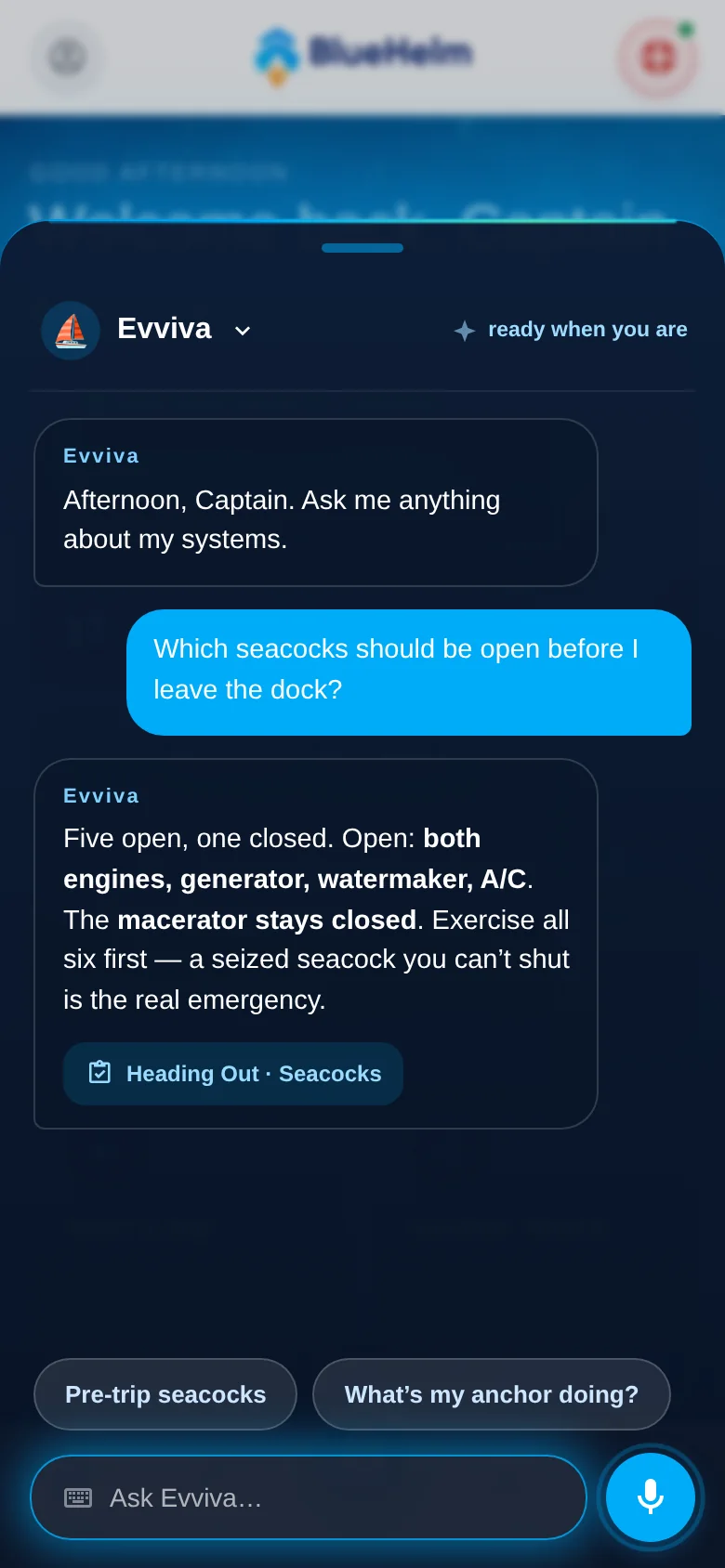
BlueHelm
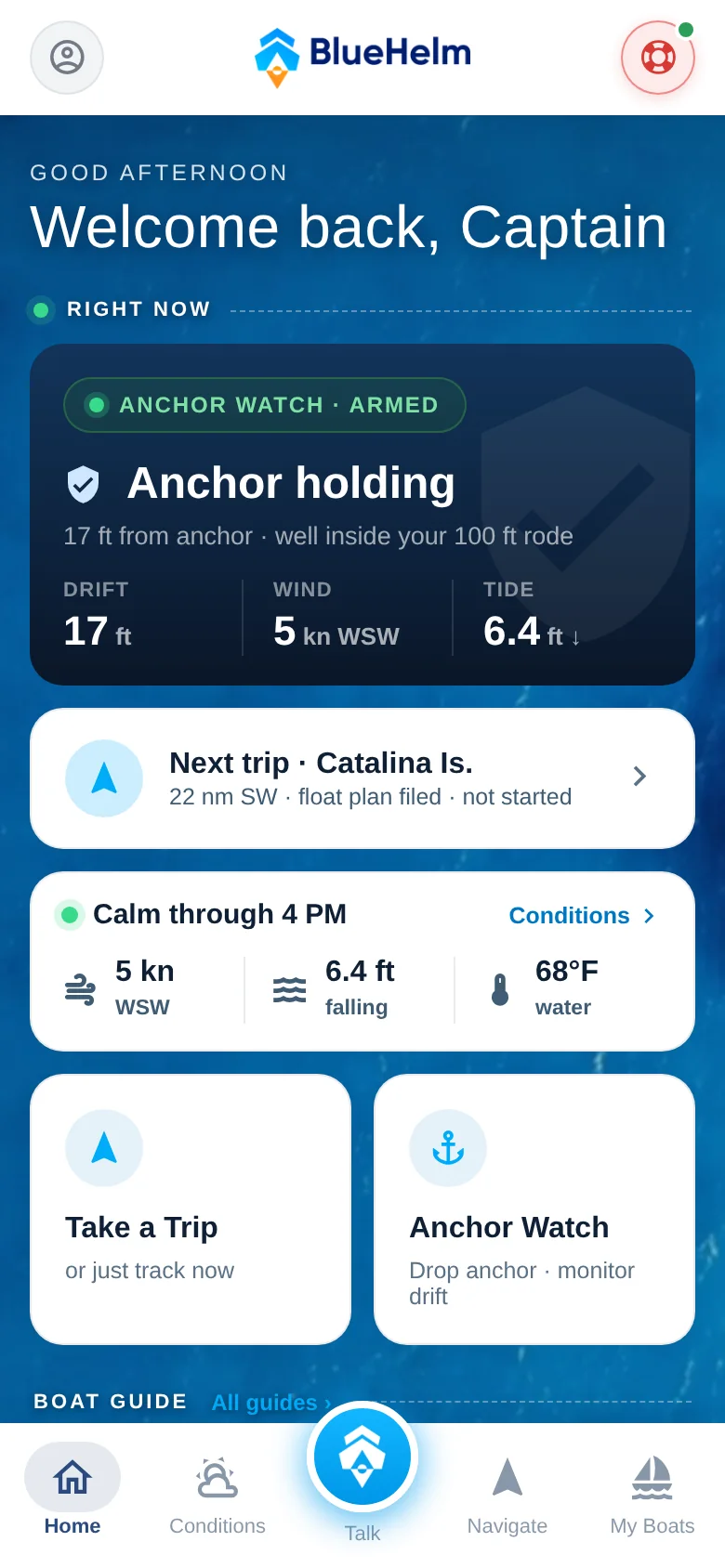
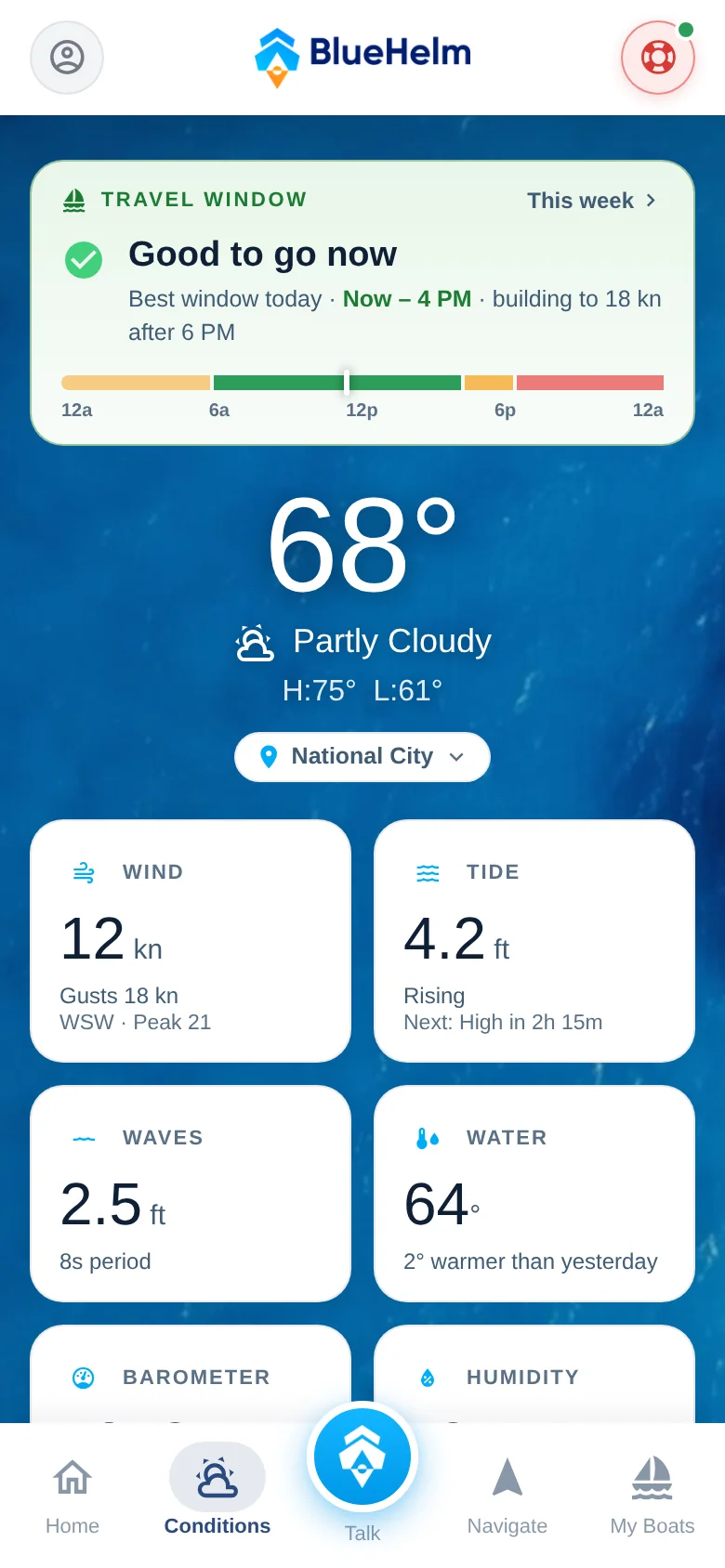
A boating safety and navigation app: anchor monitoring on the chart, trip charting with live float plans, and one-tap man-overboard alerts. The v2 release adds forecast-based Travel Windows, waypoint route charting, and Your Boat, an AI assistant that answers from the vessel's own systems guide.
- The problem
- Boaters juggle a patchwork of aging hardware, scattered apps, and guesswork for the moments that matter most: dragging anchor at 2am, reading the week's forecast, charting a passage, a person overboard with no float plan on file.
- What we built
- A cross-platform mobile app built around the moments that matter on the water. Anchor Watch runs background drift detection and now lives right on the chart. Trips share a live float plan with the people ashore who need it and log every voyage across all your boats, and one-tap man-overboard SOS shares your last known position. The v2 release adds a Travel Window that turns the week's marine forecast into a glanceable read, waypoint-by-waypoint route charting, and Your Boat: an AI assistant that answers questions about your specific vessel from its own systems guide.
- Where it is
- v2 is live on the App Store and Google Play. Shown here are the shipped screens. The first product in a wider nautical suite.
Travel window
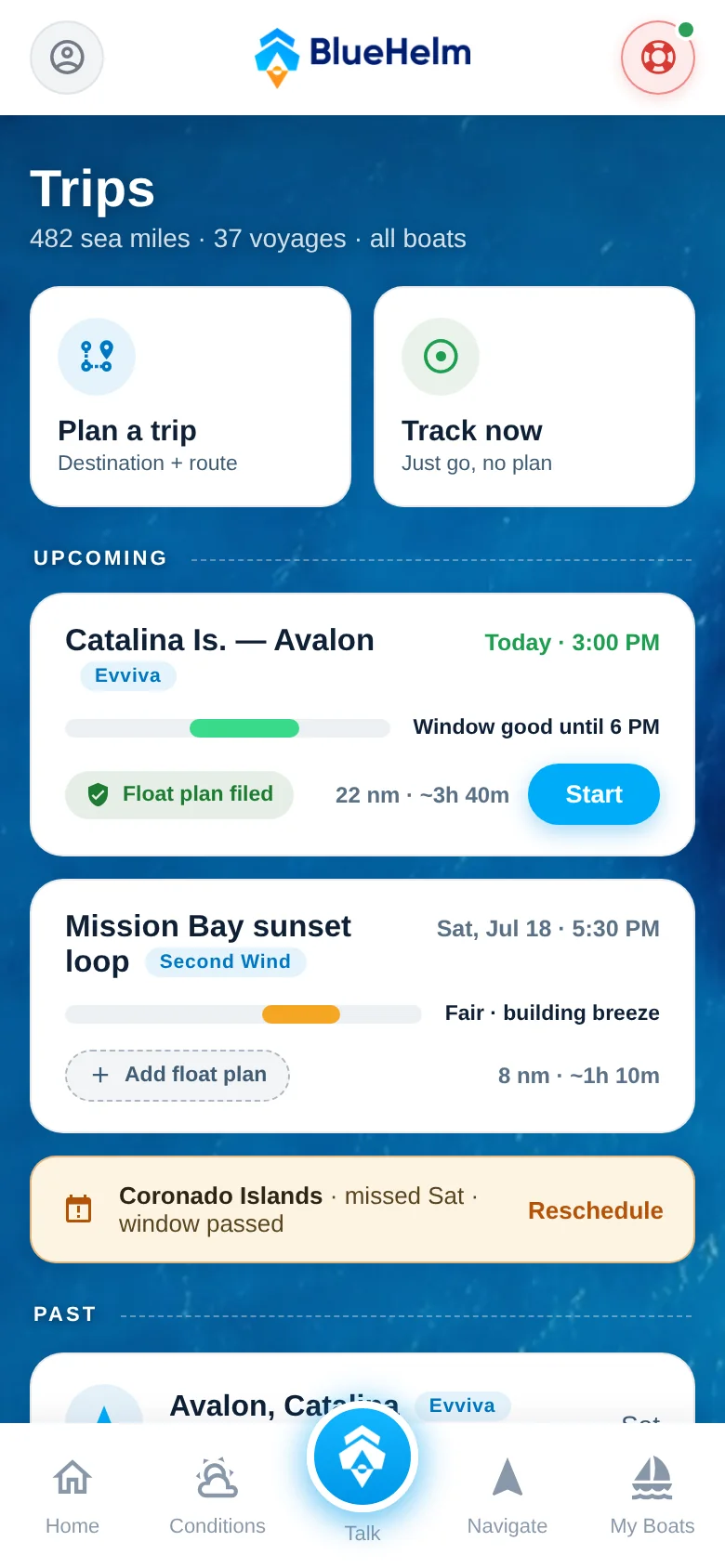
Float plans
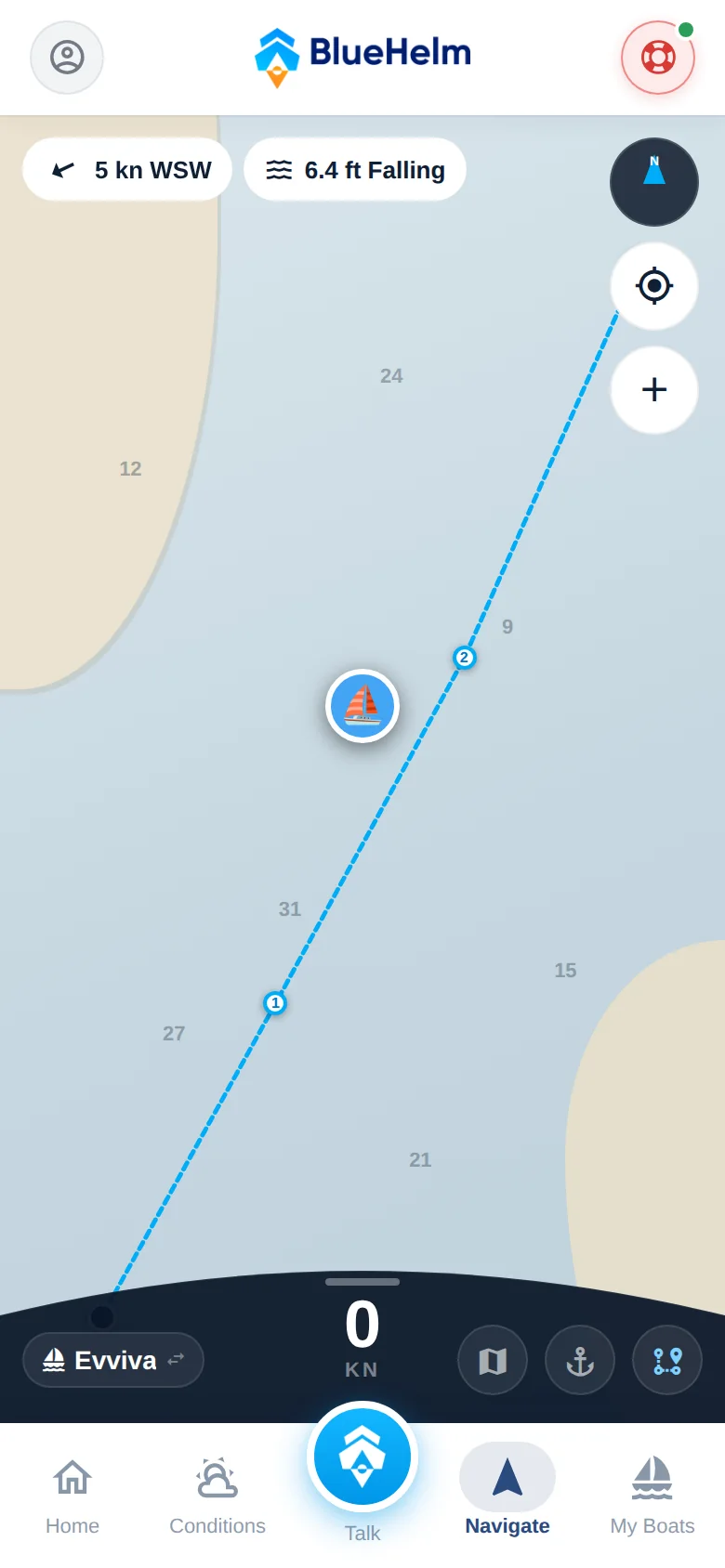
Routes

TotalConstruction Tech
The platform a general contractor runs their business on, from the first opportunity through closeout. The first modules are in production with the client and the rest are in active build. Described in outline only, because the client hasn't approved more.
- The problem
- Construction runs on spreadsheets and 20-year-old software, in tools that don't talk to each other. The licensing is the small cost. The real one is re-keying, version drift, and decisions made on numbers that were already stale.
- What we built
- One platform covering the operation end to end, rebuilt on a modern stack rather than ported, with AI applied where it changes an outcome. It's the largest thing we have in flight.
- Where it is
- In production with a commercial contractor since September 2026, with more of the platform in active build. One design-file screen is shown here, with placeholder data. No client name, client data, or numbers: we don't publish those without written approval, and on this engagement we don't have it.
Neural Ops
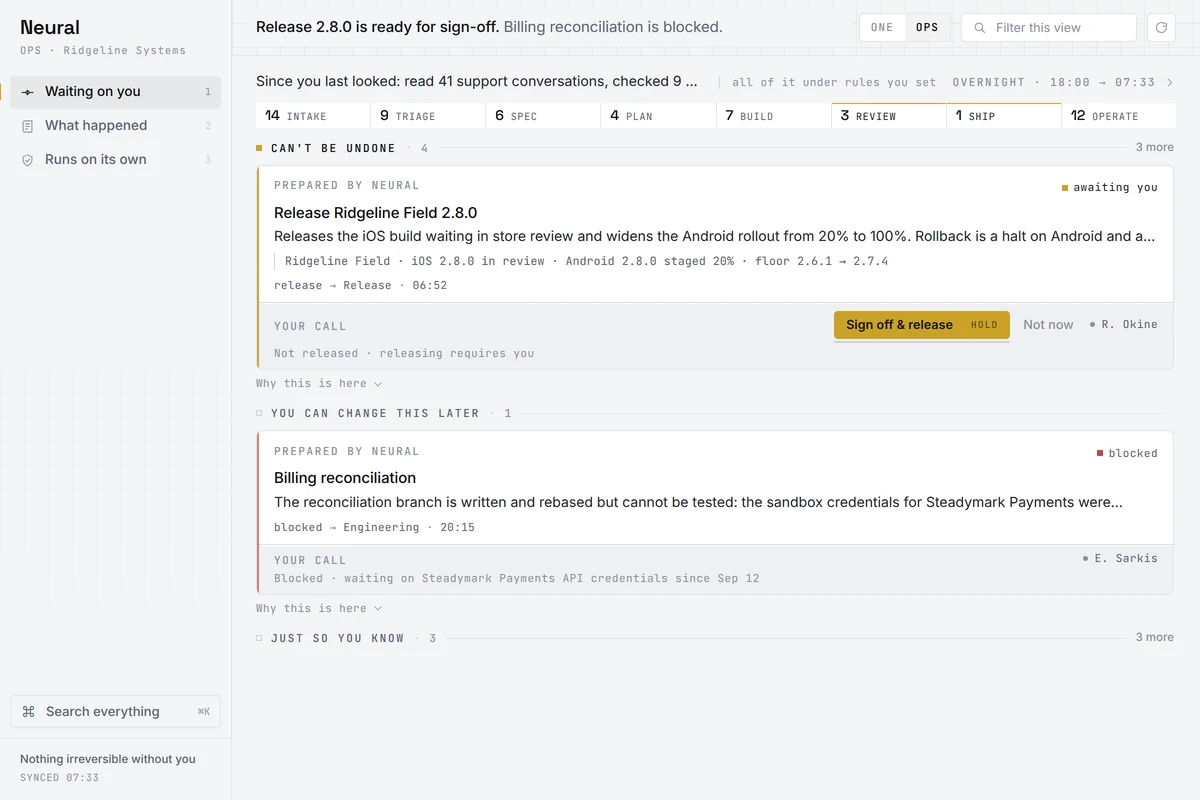
The agent platform that runs CKS itself, and the one we stand up inside yours.
- The problem
- A studio claiming to be AI-native has to actually be one. The work of planning, building, shipping, and operating software can't be a deck. It has to run.
- What we built
- Four layers of agents (product & delivery, engineering, infrastructure & ops, intelligence) under one orchestration, with senior engineers reviewing and owning quality. It plans work, ships code, runs ops, and surfaces what matters.
- Where it is
- Runs CKS day to day, including the site you're reading. Deploys privately inside your company, on your infrastructure, with your people in charge.
[02]Enterprise track record
Shipped at enterprise scale.
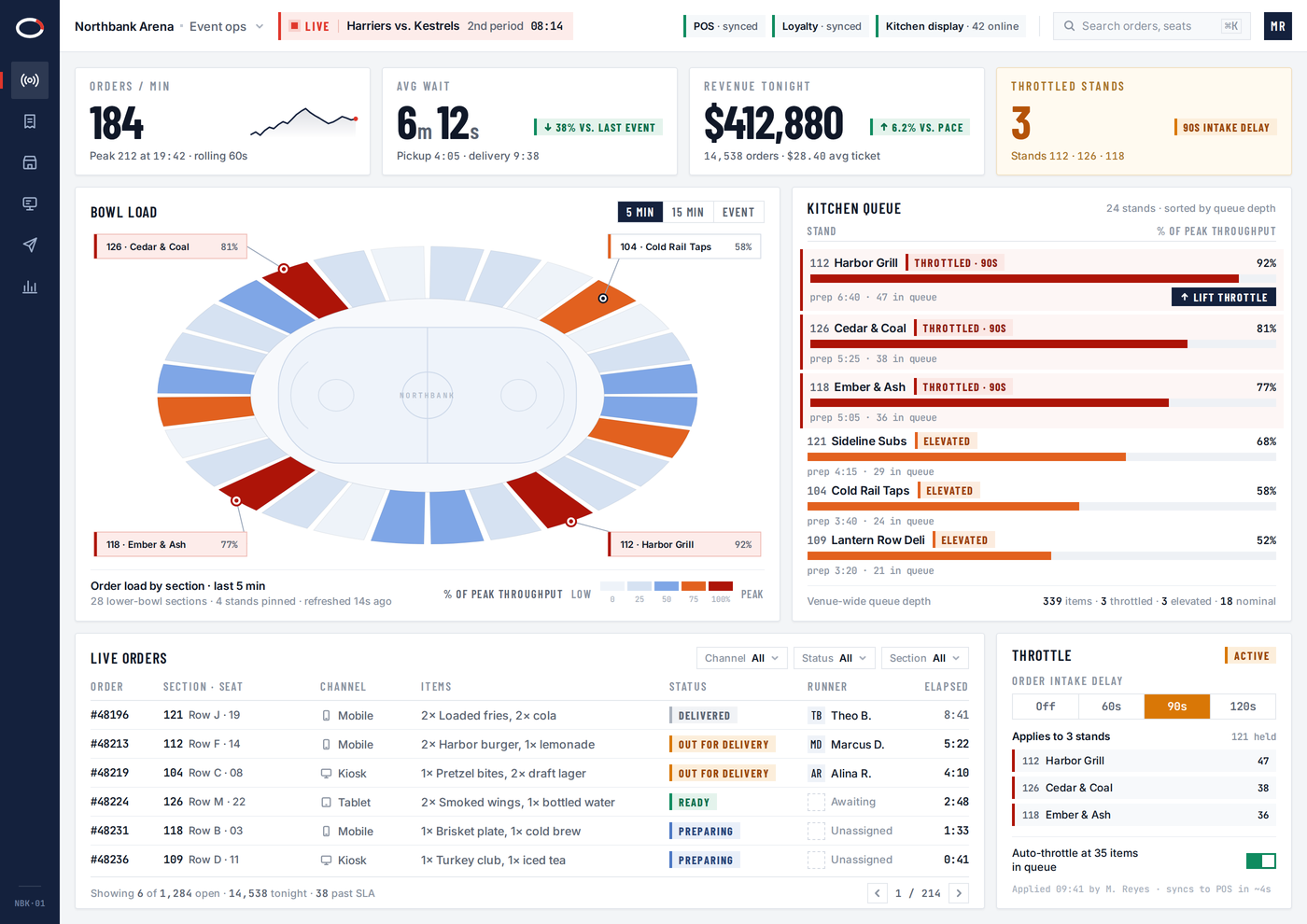
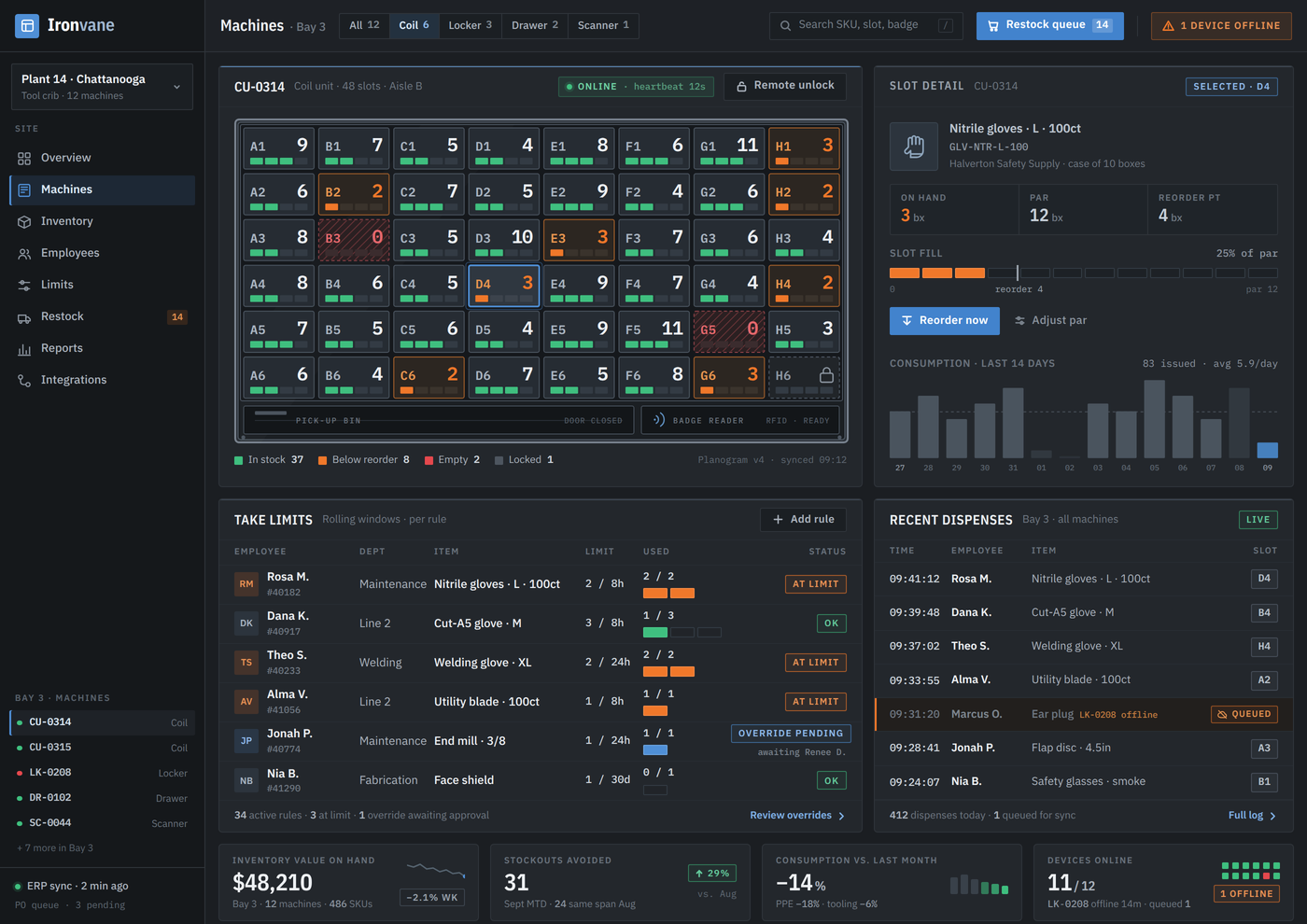
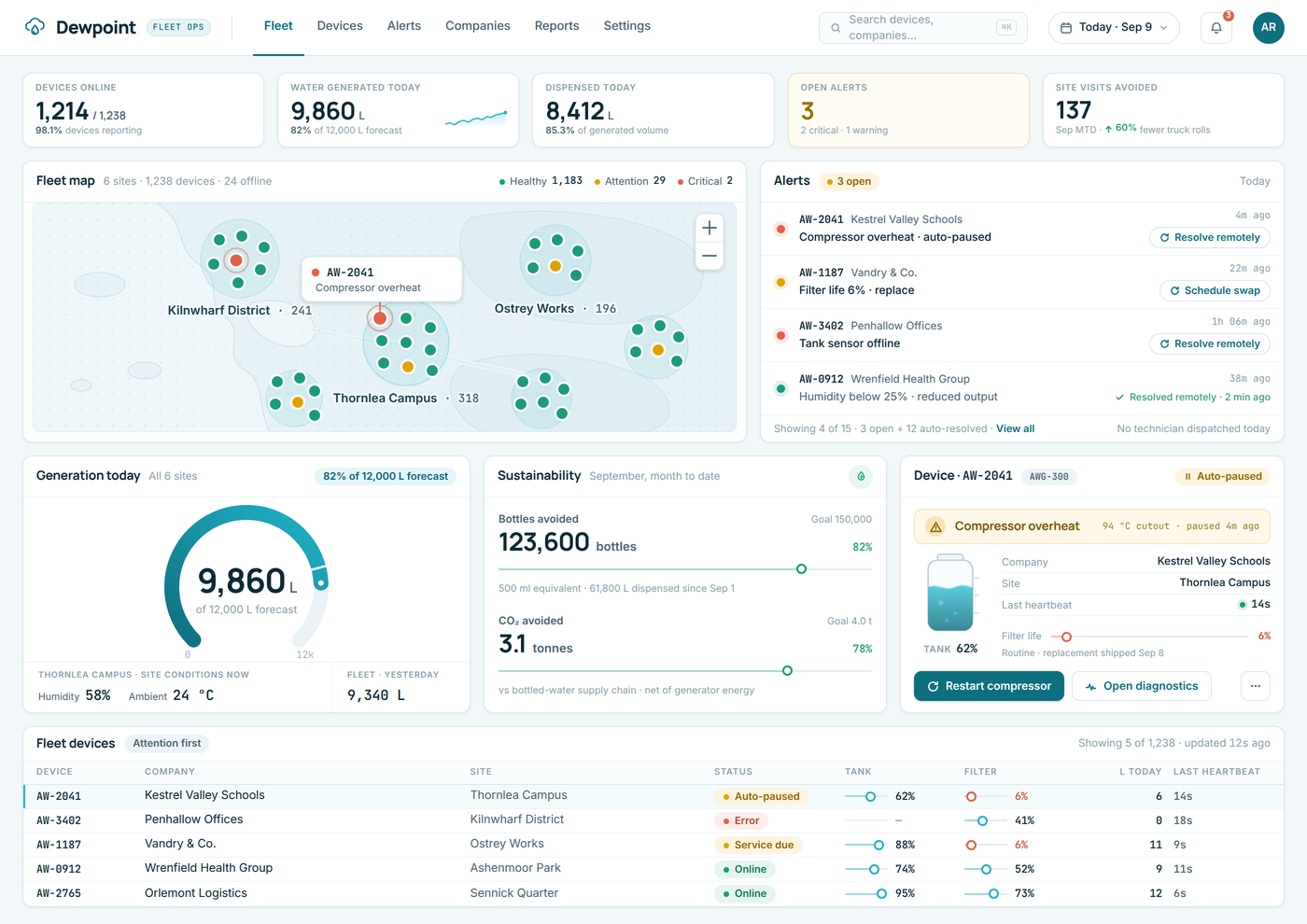
Ordering across 100+ major stadiums and arenas. Connected hardware on 500+ industrial sites. A fleet of 1,000+ devices diagnosed and repaired without a truck roll. These shipped before Neural Ops existed, and they set the bar the platform has to clear. The same engineers who delivered them review every line the agents write today.
Client-reported results from the original engagements · clients unnamed by agreement
Capabilities
What we build for clients.
The case studies are the proof; this is the range. Most client work takes one of six shapes, all of it AI-native from the first commit, all of it owned by you.
Internal tools & operating systems
The software your business actually runs on: the workflows, dashboards, and back-office systems your team lives in every day. We replace the spreadsheets and the duct-tape with something built for how you actually work. TotalConstruction Tech above is this shape, at full scale.
AI workflow automation
Put agents on the repetitive work inside your operation: intake, triage, data entry, follow-ups, reporting. Not a chatbot bolted on the side: agents wired into your real processes, with your people in charge of every call that matters. If a task eats hours and never needed a human, it's a candidate.
Legacy system integration
Connect and modernize the 20-year-old software you're stuck with. We bridge to what you can't replace yet and replace what you can, in stages, without a rip-and-replace gamble. Your operation keeps running the whole time.
Customer & vendor portals
The outside-facing systems your clients and partners touch: log in, submit, track, pay. Secure, branded, and tied cleanly into the systems behind them, so a customer's request lands in your workflow, not in someone's inbox.
Mobile & device-connected products
Apps and IoT, from idea to the app store. Native-feeling mobile, hardware and sensor integration, real-time data: the parts most shops treat as exotic. BlueHelm, above, went from concept to both app stores exactly this way.
Dashboards & decision systems
Turn your data into something you can act on: the metrics, alerts, and views that actually drive a decision, not another report nobody opens. We start from the calls you need to make, then build the system that feeds them.
The honest footnote
More case studies as they ship. We'd rather show you work that's real than a wall of logos that isn't.
And if your project doesn't fit neatly into a row above, that's the call. Tell us the problem and we'll tell you what's worth building, and what isn't.